TNPSC Signature Compressor – Set Signature Size and DPI
Compress a TNPSC signature to 230 x 75 px at 10–20 KB and 200 DPI — signed in blue or black ink inside a 6 x 2 cm box, exactly as Notification No. 11/2026 asks.
Drop a photo or signature here, paste it, or choose a file
JPG, PNG, WebP, GIF and BMP, under 25 MB. Your file never leaves this browser — nothing is uploaded.
Position the photo
Drag the photo inside the frame to centre it, and use the zoom slider to fit it. The frame shows exactly what the download will contain. There is no automatic face detection — you position the photo yourself.
Uncheck to keep descriptive JPEG tags. Location data and embedded previews are always removed.
Everything runs in your browser; nothing is uploaded.
How to Compress a TNPSC Signature Online
Compressing a TNPSC signature takes four quick steps: scan the signature, add the scan, frame the box, and download. The frame shows exactly what the download will contain, and the result line shows the actual file size before you upload anywhere.
Prepare Input Files or Images
Draw a box 6.0 x 2.0 cm on plain white paper and sign inside it with a blue or black ink pen. Scan it at 200 DPI and crop so that only the box with the signature remains. Add that scan — a JPG, PNG, WebP, GIF or BMP file under 25 MB — using the file picker, drag-and-drop, or paste.
Choose Settings and Preview Changes
The tool opens in the TNPSC signature mode: 230 x 75 px, JPG, 10–20 KB, 200 DPI. Drag the scan inside the frame so the signature fills the box and use the zoom slider to fit it; the frame keeps the exact 230 x 75 ratio, so nothing is stretched. The KB fields are editable: if your notification states different limits, type them in — your notification always wins.
Download and Verify the Output
Click “Check file size” to see the actual size, then download. Check the downloaded file in your file manager: it must be exactly 230 x 75 px and between 10 and 20 KB. Save it as Signature.jpg, as the notification asks. If the file comes out under 10 KB even at full quality, the pad-to-minimum option adds a comment inside the JPG so it reaches the floor.
TNPSC Signature: Official Size and File Limits
TNPSC Notification No. 11/2026 (Group IV), Annexure I, asks you to draw a box of dimension 6.0 x 2.0 cm (230 pixels x 75 pixels) on white paper and sign within the box, using a blue or black ink pen — of size 10 KB to 20 KB, and saved as Signature.jpg. The scan should be at 200 DPI, and the crop must contain only the box with the signature in it.
A signature this small is mostly white paper, so it compresses small: a clean scan at full quality is often under 10 KB, below the minimum. That is the trap this page is built for — the pad-to-minimum option adds a short comment inside the JPG file so it reaches 10 KB, and the pixels are untouched. The result line always says whether padding was used.
Recommended Default Settings
Keep the TNPSC signature mode (230 x 75 px, 10–20 KB, 200 DPI) with pad-to-minimum ticked. Aim for the middle of the range — about 15 KB — so the file is safely inside the window even if the portal measures size slightly differently from your file manager.
TNPSC Signature Compressor: Examples and When to Use It
People use this page for TNPSC Group IV and other TNPSC examinations that use the same One Time Registration signature format: the signature prepared here is the profile signature, and it is also used on the application itself. Because the notification fixes the exact pixel size and the exact box, a signature cropped to the wrong ratio — 230 x 100 px, for example — is the wrong file even if its KB size is right.
Real Input and Output Example
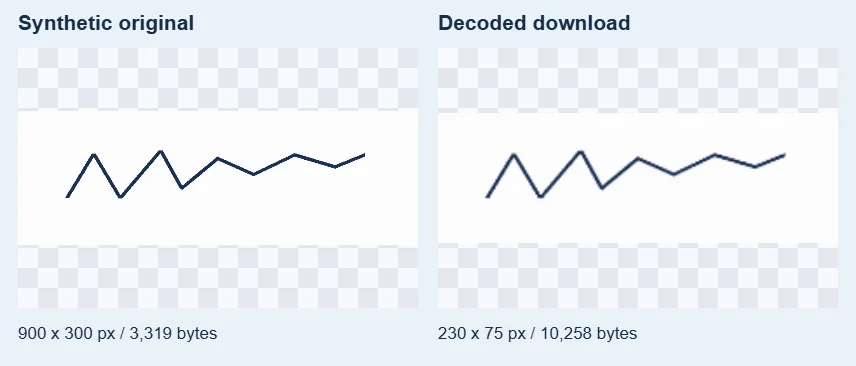
Take a 1200 x 400 px scan of a signature inside its 6 x 2 cm box. With the TNPSC signature mode the frame is 230 x 75 px, and the download is exactly 230 x 75 px as a JPG of about 15 KB at 200 DPI. If the same scan at full quality weighs only 8 KB, the pad-to-minimum option adds a comment inside the file so it reaches 10 KB, and the result line says so.
Supported Formats, File Sizes and Browser Limits
The tool accepts JPG, PNG, WebP, GIF and BMP uploads and always exports JPG — the format TNPSC asks for. DPI is written into the downloaded JPG (200 DPI) and is part of what the portal checks. Files over 25 MB are rejected, and the output is capped at 8,192 pixels on a side.
Image Quality, Size and Compatibility Checks
Scan at 200 DPI on clean white paper with no shadows: a faint or shadowed scan compresses unpredictably and may fall under the minimum or look dirty at the target size. Do not sign in block capitals, and do not sign outside the box — the crop must contain only the box with the signature in it.
Common TNPSC Signature Problems and Fixes
The most common rejection is a file under 10 KB — a clean signature scan at 230 x 75 px is mostly white paper, so it often weighs 7–8 KB at full quality. Leave pad-to-minimum ticked: it adds a comment inside the JPG so the file reaches the floor, and the pixels are untouched. The second most common problem is the wrong ratio: check the “Output size” readout before you download — it must read 230 x 75 px.
Troubleshooting Upload, Preview or Export Issues
A file that refuses to load is usually an unsupported type or a damaged file — the tool names the file in its error message. If the frame shows a grey box instead of the scan, the image is still loading or failed to decode; try the file again. If the download does not start, allow downloads from this site in your browser and try again.
Related Tools and Next Steps
TNPSC Photo Compressor, Passport Photo Maker, Resize Signature, Image Resizer, Reduce Image Size in KB.
Frequently Asked Questions About TNPSC Signature Compressor
Mobile Support, File Privacy and Download Options
This page works in any modern mobile or desktop browser. Your signature is processed locally and never leaves your device, and the download saves straight to your phone or computer.
What is the TNPSC signature size?
Notification No. 11/2026 (Group IV) asks for a signature in a 6.0 x 2.0 cm box — 230 x 75 px — as a JPG of 10–20 KB at 200 DPI, saved as Signature.jpg, signed in blue or black ink on white paper.
Why does my TNPSC signature keep coming out under 10 KB?
Because 230 x 75 px is small and a signature is mostly white paper: a clean scan at full quality often weighs 7–8 KB. Leave pad-to-minimum ticked — it adds a comment inside the JPG so the file reaches 10 KB without changing any pixel.
How do I prepare the signature scan?
Draw a 6.0 x 2.0 cm box on plain white paper, sign inside it with a blue or black ink pen, scan it at 200 DPI, and crop so that only the box with the signature remains. Then add the scan here.
Can I use a photo of my signature instead of a scan?
A scan at 200 DPI is what the notification asks for. A phone photo can work if it is sharp, evenly lit and cropped tightly to the box — but a shadowed or tilted photo often fails, so a scan is the safer choice.
Are my files uploaded to a server?
No. Cropping and resizing happen entirely in your browser using the Canvas API. Your files are never sent to a server, never stored, and disappear when you close or refresh the page.
Preserve fine strokes in the signature
The TNPSC signature compressor can make narrow lines harder to see when a source starts very small. Center the strokes with a little padding and inspect the export against the application limits before uploading.

Check the TNPSC signature at the exported size
Open the downloaded TNPSC signature and inspect fine strokes at the saved dimensions. Keep the input scan as a separate file. Use the dimensions and quality specified in your own exam notice, particularly if it lists an application range different from One Time Registration.
TNPSC lists the scan, crop and upload instructions in Annexure I of its Group IV notice.
TNPSC signature compressor checks using a scanned mark
Upload a scan with enough space around the pen strokes to avoid cutting the first or last mark. Inspect the resulting signature on a white background at the actual size. Follow the notice for your exam if the required dimensions or byte range differ from the displayed preset.

Check the compressed TNPSC signature file itself
Open the actual JPEG at full size after compression. Compare its width, height and file size with the stated range. If any stroke is unclear, return to a cleaner scan before trying a stronger compression setting.